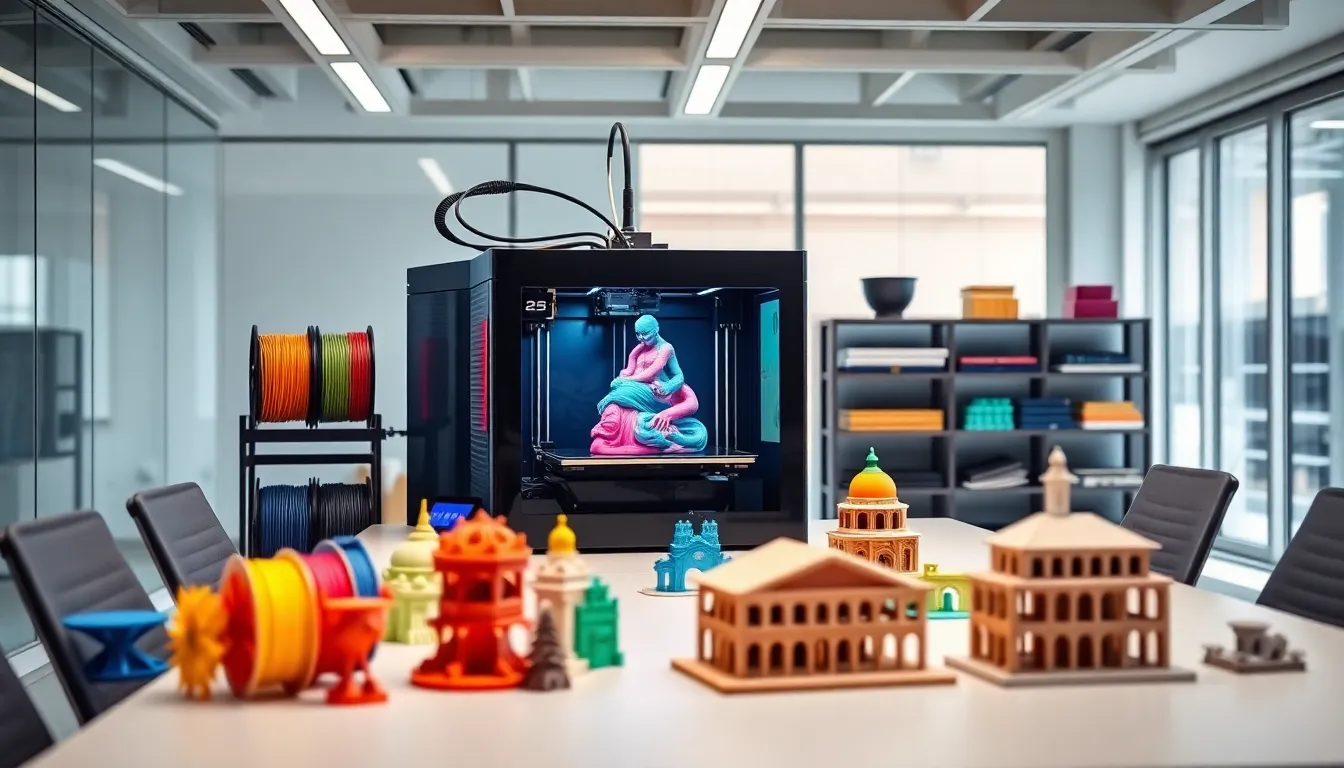

Duke University’s foray into 3D printing isn’t just about plastic and printers: it’s about redefining the future of manufacturing, and maybe even how we think about technology itself. Picture this: a printer that creates everything from intricate medical devices to functional parts for spacecraft. Sounds like something out of a sci-fi movie, right? But it’s happening right here, at Duke. This article dives deep into the world of Duke 3D printing, exploring how this technology is reshaping various industries while weaving in a dose of humor to keep things light. Let’s uncover how Duke is taking us from traditional manufacturing to a world where the only limit is imagination.
Understanding 3D Printing Technology
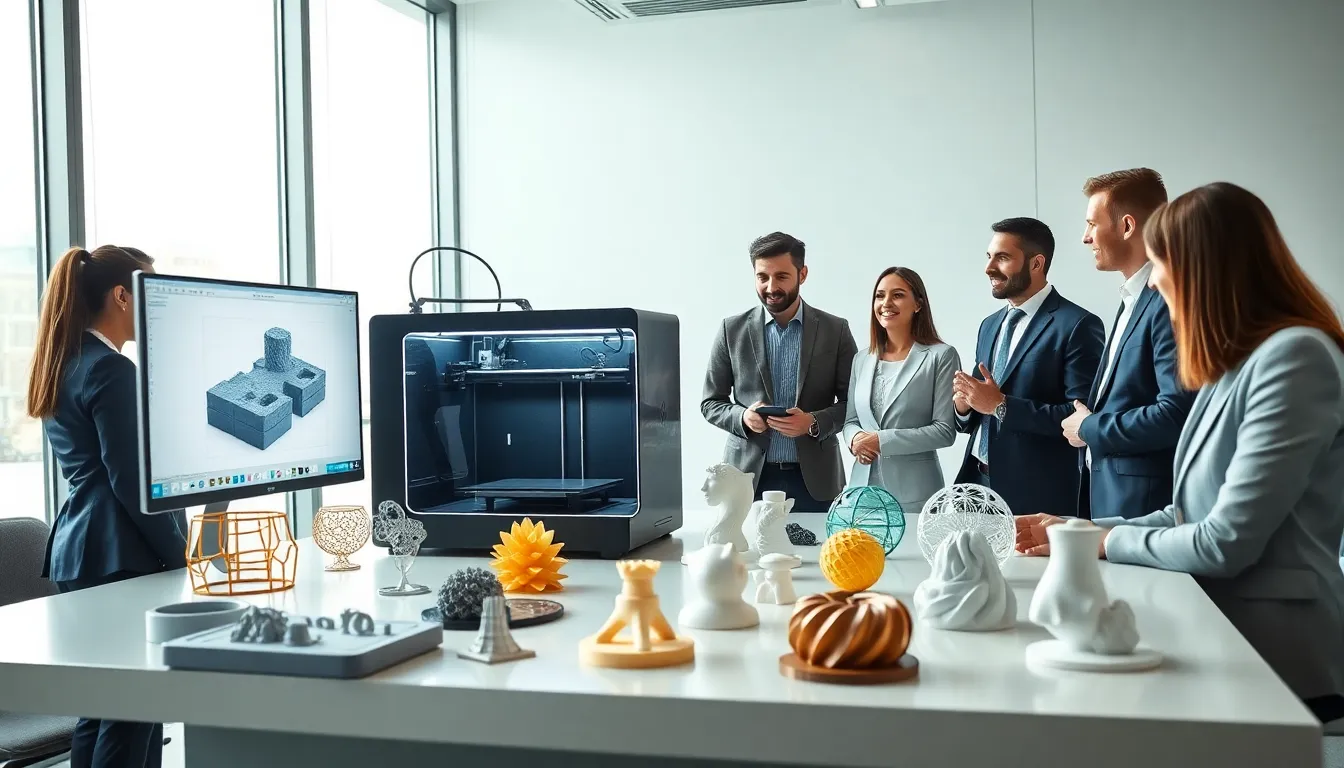
3D printing, also known as additive manufacturing, involves creating three-dimensional objects layer by layer from a digital file. It contrasts sharply with traditional subtractive manufacturing, where material is removed from blocks to create parts. The beauty of 3D printing lies in its ability to produce highly complex geometries that would be nearly impossible to achieve with conventional methods.
This technology uses various materials, including plastics, metals, and even living cells, which makes it versatile. The process typically begins with a 3D model created using Computer-Aided Design (CAD) software. This model is then sliced into thin horizontal layers, and the printer builds each layer sequentially, fusing materials together.
In recent years, advancements in 3D printing technology have skyrocketed. Innovations such as multi-material printing and improved speed have significantly enhanced production capabilities. Also, the decreasing costs of 3D printers are making this technology accessible to more organizations, not just high-end manufacturers.
Applications of 3D Printing in Various Industries
The applications of 3D printing span across industries, making it a jack-of-all-trades in the manufacturing realm. From healthcare to aerospace, its impact is undeniable. In the healthcare sector, imagine customized prosthetics tailored to fit individual patients perfectly. Surgeons are even using 3D-printed models to plan complex operations, leading to better outcomes.
In the automotive industry, manufacturers are utilizing this technology to create lightweight components, enhancing fuel efficiency and reducing costs. 3D printing allows for rapid prototyping, enabling companies to test designs quickly, adapt them on-the-fly, and reduce time-to-market.
Aerospace has also jumped on the 3D printing bandwagon. Not only does it reduce weight in parts, which is crucial for flights, but it also facilitates on-demand production for space missions. This means parts can be created right where they’re needed, eliminating long supply chains, which is particularly useful for missions to distant planets.
And who can forget about the impact on design industries? With 3D printing, artists are exploring the boundaries of creativity, producing art that bridges the gap between digital and physical realms.
The Role of Duke University in Advancing 3D Printing
Duke University has established itself as a powerhouse in 3D printing research and development. The institution houses state-of-the-art facilities, including the Duke Center for 3D Printing, where researchers and students come together to innovate and collaborate.
One impressive aspect of Duke’s approach is its interdisciplinary focus. Researchers from fields such as engineering, medicine, and computer science work side by side to push the boundaries of what 3D printing can achieve. This collaborative environment fosters the creation of groundbreaking applications that transcend traditional disciplinary limits.
Besides, Duke actively contributes to the academic community by publishing research findings and sharing advancements with industry partners. Their commitment to education ensures that the next generation of engineers and scientists are well-versed in 3D printing technology.
Notable Projects and Innovations at Duke
Duke University has garnered attention for several remarkable projects in the 3D printing space. One standout initiative involves developing bio-printed organs, aiming to tackle the organ shortage crisis. Researchers are experimenting with printing tissues and organs using a patient’s cells, minimizing rejection risk and potentially saving lives.
Another noteworthy project is the creation of advanced aerospace components. Duke’s engineering team has collaborated with leading aerospace firms to produce lighter, stronger parts that enhance aircraft performance. Their research has elevated the role of 3D printing in an industry where every ounce matters.
Duke has also invested in educational outreach programs to involve local schools in 3D printing. Students have the chance to engage with cutting-edge technology, sparking interest in STEM fields and igniting passion early on.
Challenges and Future Directions for 3D Printing at Duke
Even though its advancements, 3D printing at Duke encounters several challenges. One significant hurdle is material limitation. While progress is being made, not all materials are suitable for 3D printing, affecting the range of applications. This limitation influences everything from production speed to durability.
Another challenge is scalability. Scaling up from prototype to mass production remains a tricky feat. Researchers are continuously working on improving printing speeds and efficiencies to meet industrial demands.
Looking to the future, Duke is determined to overcome these obstacles. They’re investing in research aimed at developing new materials, optimizing processes, and integrating artificial intelligence to streamline 3D printing practices. As they refine these techniques, the potential for revolutionizing manufacturing continues to grow.